

We often hear of the ways that “data-driven HR” can lead to more effective decisions and better employee lifecycles. Yet, many talent acquisition teams are still struggling to find effective ways to harness the power of the recruitment data at their fingertips.
Job adverts go live, applications roll in, interviews are held and hires are made. Before, during and after each of these stages, there is a treasure trove of recruitment data points, waiting to be mined that can reveal all sorts about the best and worst parts of your recruitment processes and how candidates feel along the way.
Talent acquisition generates a huge amount of actionable data. When used properly, it can be used to sharpen your recruitment marketing, improve candidate experience, and ultimately secure better quality candidates in shorter timeframes.
A CIPD report in 2024 showed that while there were small advances in how organisations use data in their organisational strategies, there is still a way to go and immense opportunities to take a more evidence-based approach
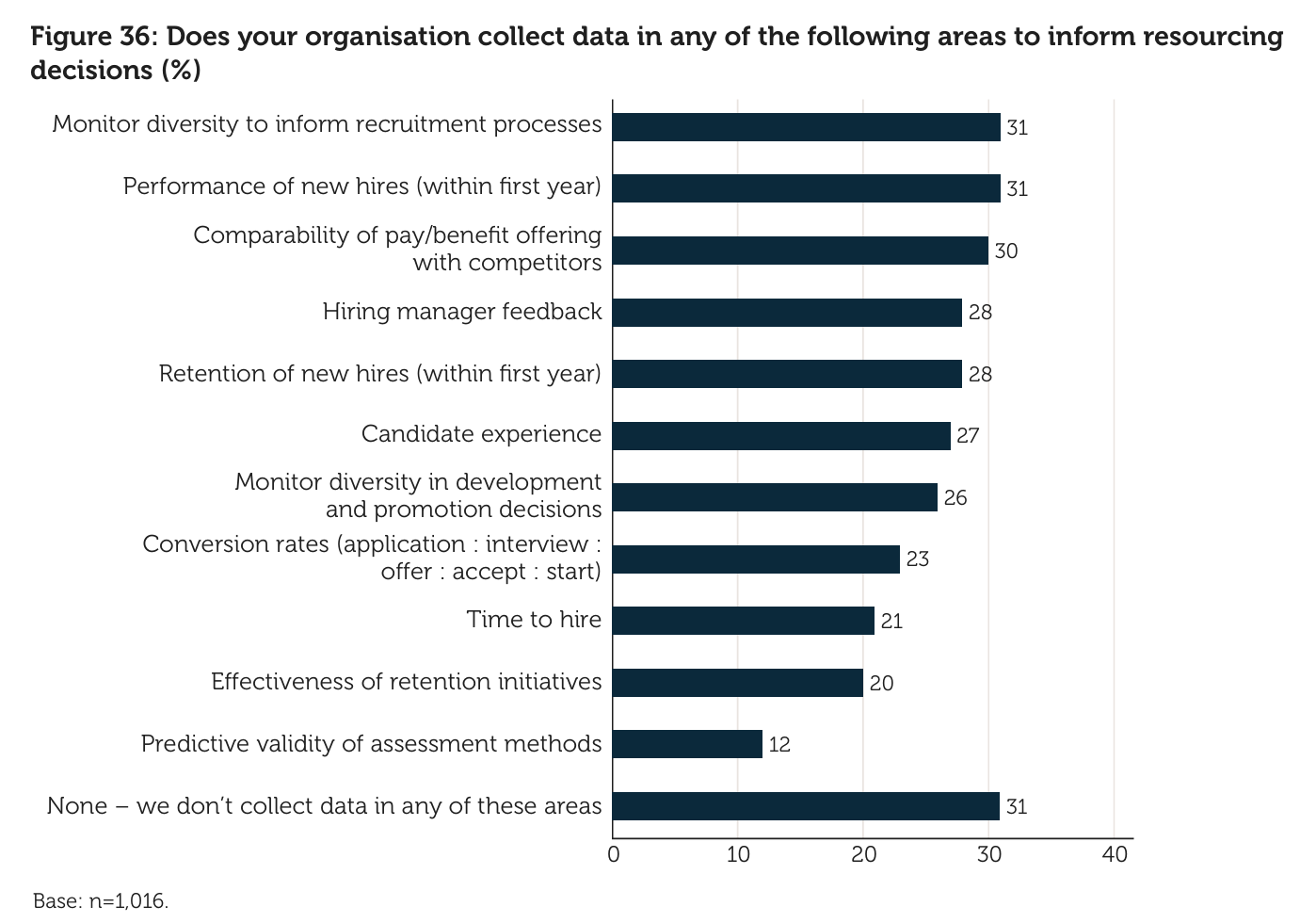
Here are eight recruitment data points that every recruitment team should be using to inform their talent acquisition strategy:
1. Applicant Source / Source of Hire
Which channels actually deliver candidates? Most Applicant Tracking Systems (ATS) will attribute a source to each application; this data is crucially important when it comes to recruitment marketing.
On a simple level, it will reveal where you get most of your applications from, but as we know, quality beats quantity every time. Tracking the source of each hire will reveal which sources lead to more successful outcomes. Going one step further, and reviewing which hires are still in role after 3, 6 or 12 months will reveal which sources provide candidates who stick around.
2. Candidate Quality by Source
Similarly, tracking application quality by source will add an extra dimension to the assessment of candidate quality.
Using ATS recruitment data to review how many candidates from each source were progressed from ‘new applicant’ to ‘screening stage’ and then onto ‘interview’ stage will reveal which candidates recruiters found to be the best fit for particular roles.
In combination with the above, this data can be used to build a powerful dashboard where you can review the percentage of applicants from each source that make it to each stage and review this alongside the budgets spent to work out the ROI for specific job boards or campaigns.
3. Careers Site Analytics
Combining the previous two points will produce something that starts to look like a funnel.
But there are multiple steps that happen before candidates have even found a job to apply to; your career’s site can offer all sorts of insight into how easily a candidate can find your opportunities. How long did they spend on a job advert, what percentage of those who viewed it clicked Apply and then what percentage of those then went on to complete the application in it’s entirety.
4. Candidate Drop-Off Rates
Candidate drop off rates is a piece of recruitment data that can present itself from the moment a candidate lands on your careers site all the way through to a start date.
Your website will reveal when candidates decided or did not decide to apply and your ATS shows where candidates decided to withdraw from the process. Was it during application? After a first interview? During offer stage?
High drop-off rates highlight friction points in your candidate journey and fixing them directly improves conversion.
5. Time-to-Hire (or a slightly different version thereof!)
A classic recruitment data point that most recruiters will be familiar with. Most teams will use this as an efficiency metric to assess recruiter performance; but it can also reveal a lot about candidate experience and the recruitment processes you employ. In-demand talent won’t wait around and so it has never been more important to ensure that bespoke processes are built by role type.
Tracking average time-to-hire by role type can reveal which sectors and roles experience the most bottlenecks and can therefore help you streamline decision-making around how you interact with that talent.
This metric should also be used to leverage more effective relationships with hiring managers and promote shared accountability. Perhaps a better version would be a ‘Started on Time % Rate’ where recruiters and hiring managers agree a date for a new hire to start in the business, allowing time for notice periods and interview stages along the way. Tracking how many hires were then hired within the agreed timeframe can then be an efficiency metric, a measure of candidate experience and an indicator of marketplace competitiveness all in one.
6. Offer Acceptance Rate
If candidates are turning down offers at the end of your processes, then learnings should always be taken away.
It could be something as procedural as the recruitment process took too long, or a disengaging candidate experience.
Or, it could indicate something more systemic; maybe your organisation’s EVP isn’t particularly competitive in the marketplace or the reality of the role wasn’t clear ahead of application. Misaligned expectations around salary are perhaps most likely to surface at this juncture.
Tracking and analysing this data and where possible collecting qualitative data to go alongside ensures your recruitment messaging stays aligned to reality and Talent Acquisition teams can contribute meaningfully to conversations about wider People Strategy if it looks like there are larger issues at play.
7. Candidate Feedback & NPS
Collecting structured feedback from candidates, whether they were hired or not, is invaluable to understanding your recruitment journey end to end.
This is truer still, if this can be collected at various points in the journey (provided this isn’t to the detriment of candidate experience!)
A simple candidate Net Promoter Score (NPS) can reveal gaps in communication, fairness, or process. Recruitment teams often skip this, but it’s one of the fastest ways to improve experience and reputation.
An important note here; ensure the survey used is consistent throughout the process; using NPS at application stage but a different scoring system post-hire will make any analysis almost meaningless as they won’t show the strongest and weakest points in your processes.
Final Thought on Recruitment Data
Data won’t replace the human side of hiring and nor should it. However, implementing a meaningful data strategy into talent acquisition removes guesswork and takes recruitment from a reactive process to a proactive one.
You can track the sentiment of candidates as they first engage with your organisation, see how they are feeling as they go through the process and how engaged they feel ahead of joining the company. It will allow you to work backwards and discover which sources give both the best ROI and the candidates that are most aligned with your business and therefore likely to be more productive and reduce future costs related to attrition.
If your recruitment team wants to unlock the power of data in talent acquisition, then let’s talk. I help organisations identify the recruitment data points just waiting to be put into action. Together we can interpret them, and use them to strengthen candidate experience, hiring outcomes and broader people strategy.