

In recruitment, the terms talent attraction and talent acquisition can often be confused with one another. Unsurprisingly, given that they sort of sound the same and neither is super clear on what they do.
In practice, they describe two very different parts of the hiring process, and when they’re blurred together or not considered as separate elements, hiring can become harder than it needs to be.
Understanding the differences between the two and having subject-matter experts for each is the first step towards strategic, proactive hiring instead of urgent, reactive recruitment.
Hiring Doesn’t Start at the Screening Stage
When a role proves difficult to fill, the pressure and questions often fall on recruiters. Screening takes longer, interview pipelines feel weak, and shortlists don’t quite hit the mark.
But by the time a recruiter is reviewing CVs, the die has most likely been cast and the important decisions have already been made, just not by you…
Candidates have taken a look at what you have on offer and decided:
- whether the role is relevant to them,
- whether the organisation feels like a place they’d want to work,
- and whether it’s worth investing time in applying.
What they have used to inform these decisions is where the difference between attraction and acquisition really starts to matter.
So, What Actually Is Talent Attraction?
Talent attraction focuses on who chooses to engage with your organisation in the first place. And, that doesn’t just apply to when a job advert is posted.
Talent Attraction is concerned with:
- how your company appears and projects itself externally,
- where and how job adverts appear,
- how roles are positioned in job adverts,
- what candidates learn about the organisation before applying,
- and what expectations they form about the role and working environment.
In simple terms, talent attraction answers questions candidates are already asking:
- Is this role for someone like me?
- Does this organisation align with what I’m looking for right now?
- Do I want to take this any further?
When attraction is working well, the people arriving at your hiring process are already broadly aligned with your company values and engaged by your job offering. They’re informed, interested, and intentional.
And So, What Is Talent Acquisition Focused On?
Talent acquisition begins once interest exists, and that doesn’t always mean a candidate has applied for a live vacancy. It starts when someone has expressed a desire to work for your organisation, either now or in the future.
Talent Acquisition focuses on:
- building and managing future pipelines and talent communities
- assessing capability and potential
- running interviews and selection processes
- making hiring decisions and managing offers
Talent acquisition answers a different set of questions:
- Can this person do the job?
- How well do they fit the team and requirements?
- Are they the right choice among this group of candidates?
It’s also worth clarifying that talent acquisition is not the same thing as recruitment.
Recruitment focuses on filling approved, live roles. Talent acquisition is broader and longer-term; it is concerned with ensuring the organisation is ready to hire what it needs, when it needs it. Recruitment, therefore, sits within the broader talent acquisition process.
Why The Distinction Between Attraction and Acquisition Matters
When organisations separate attraction and acquisition conceptually, even if they’re handled by the same people, a few important things happen:
- recruiters spend more time assessing quality and less time filtering noise,
- candidates arrive better informed and more engaged,
- misalignment shows up earlier, not after hire,
- and hiring outcomes improve without adding complexity.
It also removes a lot of unnecessary pressure. Recruiters aren’t expected to “fix” attraction issues at interview, and attraction activity isn’t judged purely on volume.
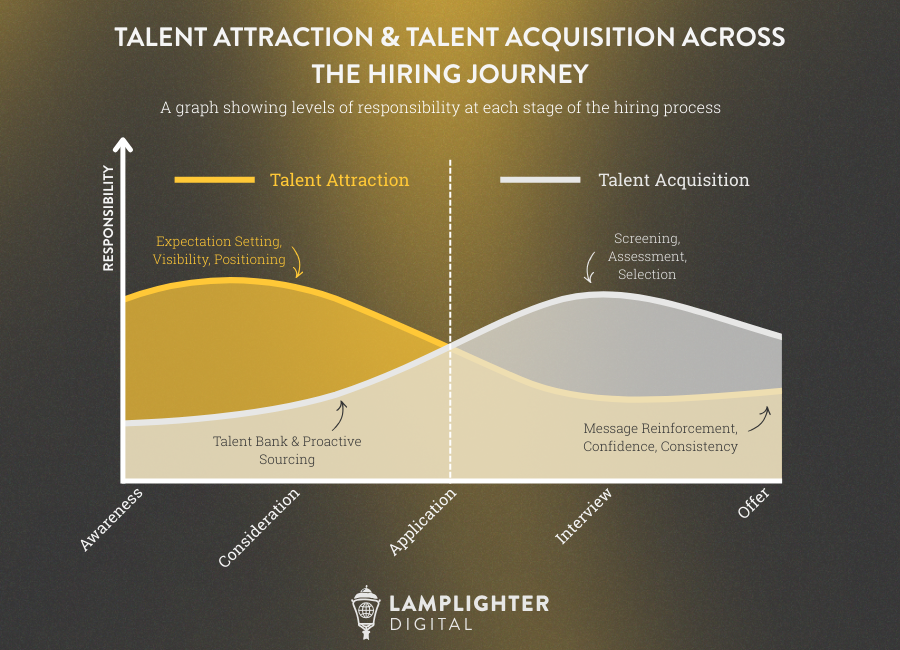
Where Talent Attraction Continues Beyond the Interview
While talent acquisition owns assessment, selection, and hiring decisions, talent attraction doesn’t simply stop once an application is submitted.
Its role often continues in how the organisation communicates and reinforces expectations through later stages of the journey.
This can include:
- the tone and messaging of candidate communications,
- how the offer is positioned and presented,
- employer brand signals within offer documentation,
- and how the onboarding journey and materials reinforce what candidates were told to expect.
At this stage, talent attraction isn’t about persuading candidates to apply; it’s about ensuring consistency between what was promised earlier in the process and what candidates experience as they move towards joining. Its focus is to maintain the levels of engagement a candidate has built in the attraction stages and ensure continued participation in the hiring process.
When this alignment is strong, confidence increases and drop-off reduces. When it isn’t, doubts often appear late in the process, sometimes even after an offer has been accepted.
A Final Thought
If hiring feels harder than it should, it’s often worth asking a simple question:
Are we spending more time attracting the right people or filtering the wrong ones?
Talent attraction and talent acquisition aren’t competing ideas. They’re two parts of the same system, doing different jobs at different moments. When both are understood and allowed to do what they’re best at, hiring becomes clearer, calmer, and far more effective.
For a review of your internal and external Talent Attraction processes, get in touch or book a free Candidate Experience review.