
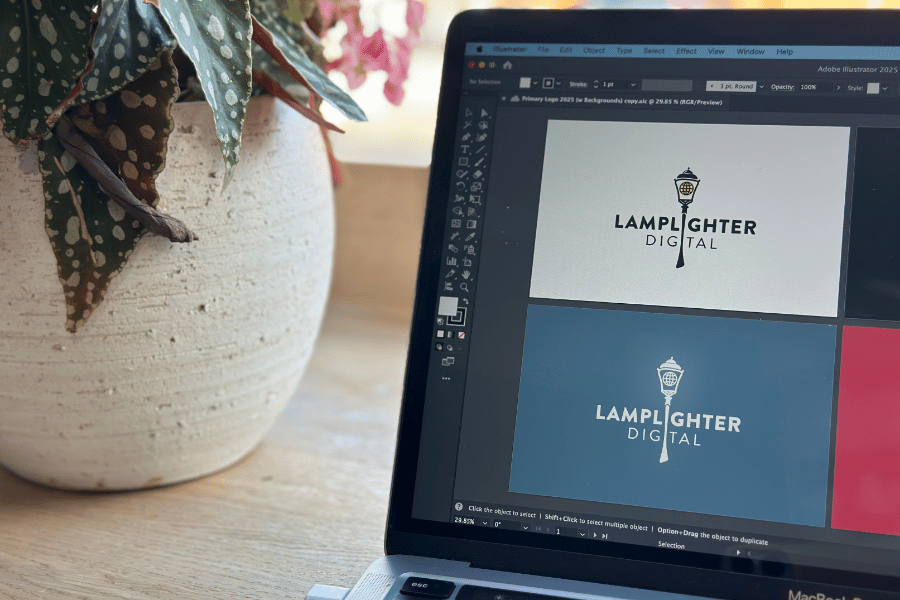
Branding isn’t just for big corporations with global marketing budgets. Branding your small business can be the difference between being forgettable and being the one that gets the call, the click, or the sale. Done right, small business branding builds as much trust as a larger competitor. It gives your business a clear, confident voice, which helps customers understand quickly what your business is all about.
This guide walks you through the fundamentals of small business branding so that your business can stand tall with the rest.
Whether you’re just starting out or looking to tighten up what you already have, these steps will help you shape a brand that’s consistent, credible, and aligned with your business goals.
What Do We Mean by “Branding”?
Branding refers to the way your business presents itself to the world, visually, verbally, and experientially. It includes your logo, colours, typefaces but also your messaging, the tone of voice you choose, and how your customers feel when they interact with you.
Done well, a strong brand identity will give a customer or client clues about who you are and where you sit in the market with nothing more than a first impression.
Think about some of the biggest brands in the world and how they have chosen colours, fonts, wording that evoke feelings and sentiments. Then think about how this speaks to their particular audience or client profile.
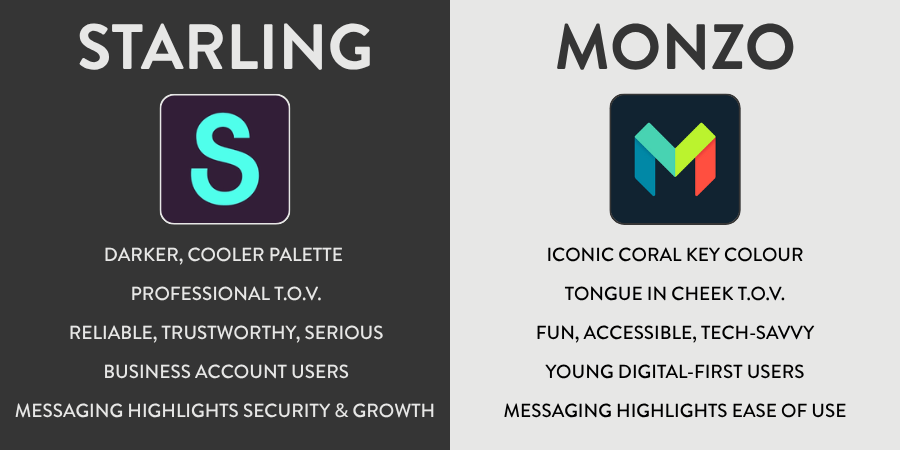
Branding serves to differentiate your product or service from the crowd. That differentiation is key, especially for small businesses competing with larger players.
Your brand should be built on your business’s values and ethos and reflect that clearly. That way, customers who hold similar values will see in you what they see in themselves and engage with your brand meaningfully.
Small Business Branding is Just as Important!
Branding is universally accepted as a crucially important part of any business. But small business owners sometimes assume branding is a luxury or something to look at after the website’s up and running, or after they’ve got a few more clients through the door.
In reality, branding is most effective when it’s built in from the start and perhaps even part of an initial business plan. This is when you are actively thinking about what sets you apart, what values will drive your business and how you serve yourself up to your clients.
Even for a new or small business, strong branding can:
- build credibility and trust
- help people remember you
- make your marketing and messaging more consistent
- allow you to charge appropriately for your services
Customers are more likely to choose a business that feels established and knowledgeable, regardless of actual business size.
That feeling comes from branding and the story your brand has told, not from company size.
The Core Elements of a Small Business Brand
Let’s break down the core, essential components that make up small business branding and what you should focus on when you’re getting started.
Visual identity is the most recognisable aspect and what most people think of when they think about “branding”. This includes your logo, colour palette, typography, and imagery style. Building a cohesive and defined set of branding rules is helpful to you and to your customber base. Consistency ensures every message or visual you create across your website, social media, and printed materials are all saying the same thing.
Positioning is about understanding where your business sits in the market and who it serves. What do you offer that others don’t? Who is your ideal customer? Having this as an immovable part of your brand can also help you in the future when it comes to growth and expansion. Very few businesses cater to the population as a whole and defining who you are and why you are that way ensures your brand stays true to it’s roots.
Values and personality are increasingly important as businesses share their stories on social media. These platforms often reward authenticity and so values and ethos normally sits at the heart of that. People tend to like to buy from businesses, particularly small businesses, that share their values or who feel relatable and authentic and so being clear about these can be a real advantage.
Brand voice and messaging define how your business speaks to your customers. Are you friendly and informal? Professional and concise? This tone will again be driven by your business values and should match how your audience wants to be communicated to. If you business demands a corporate tone of voice, lean into it! But if you find you’re using corporate jargon to sell pyjamas for dogs, then perhaps a tone adjustment would be helpful.
Top 5 Things to Get Your Small Business Branding Started
Branding doesn’t require a huge budget, but it does require focus. Start by defining what your business is about and who you want to attract.
- Identify your audience: Be specific about who you’re targeting; age, location, industry, needs. It’s easier to build a brand when you know who you’re speaking to.
- Clarify your message: What do you do? Why does it matter? Being able to boil this down into two or three sentences will help at every step of your business journey.
- Develop your visual identity: If you can, work with a designer to create a professional logo and select a small set of colours and fonts that reflect your brand.
- Stay consistent: Apply your visuals and messaging across your website, social media, business cards and signage. Learn how to deliver this consistently so everything is cohesive.
- Evolve as you grow: Your brand doesn’t need to be perfect on day one, but it should be clear and aligned to your personality. As your business develops, revisit and refine.
These steps line up with what you’d find in foundational brand development frameworks used by agencies worldwide. They’re practical, proven to work and crucially for your small business, totally achievable.
What to Avoid for your Small Business Branding
Many small businesses fall into the trap of copying competitors or changing their look too often. Inconsistent branding confuses customers, weakens trust and prevents growth. Another common misstep is focusing only on the logo and ignoring the tone, messaging, and wider customer experience. It might seem a little wooly or ill-defined to begin with but even a small set of rules will help your brand immensely further down the line.
Another crucial thing to avoid is allowing too much flex within your brand. Once you have your brand defined stick with it and be strict. Using a different shade of blue to the one in your guidelines might seem small but it dilutes your brand over time. Same goes for tone of voice, a social media post using informal language that is then followed up with a serious, corporate tone is a clear sign that you’ve not nailed down your small business branding.
Branding isn’t just a design exercise, it’s a strategic one. If your visual identity looks professional but your messaging is unclear or inconsistent, the impact is lost.
How Can Lamplighter Digital Help With Your Small Business Branding
Branding is not about being fancy or flashy, it’s about condensing your business values down into an identity that your customers recognise and understand. It also helps your business remain consistent externally.
Whether you’re running a small business in Birmingham or offering services nationwide, branding gives your business shape and substance from the get go.
At Lamplighter Digital, we work exclusively with small businesses to create a kick-starter branding package to get all of the above ready for you while your business is gearing up. We offer a fixed-price package for £500; we work with you to design a logo and colour palette, choose the right typefaces, nail down your tone of voice and produce a brand guidelines document that you can refer back to time and time again.
If you’re looking to get your small business branding nailed, get in touch through our contact form to set up a Discovery Call today.